New DXO FilmPack 8


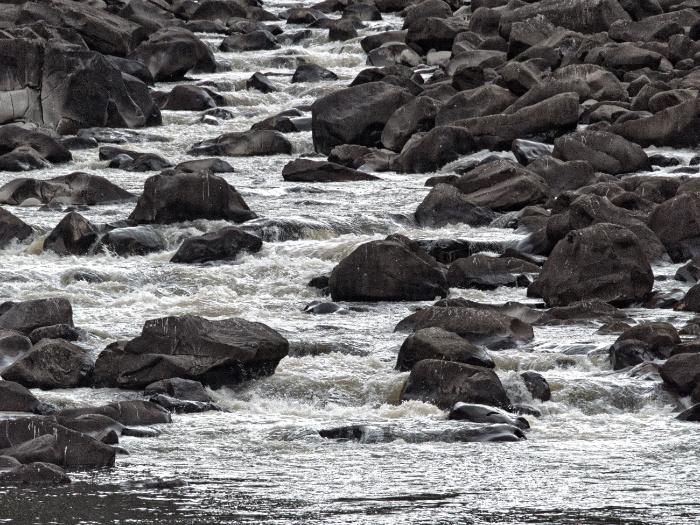
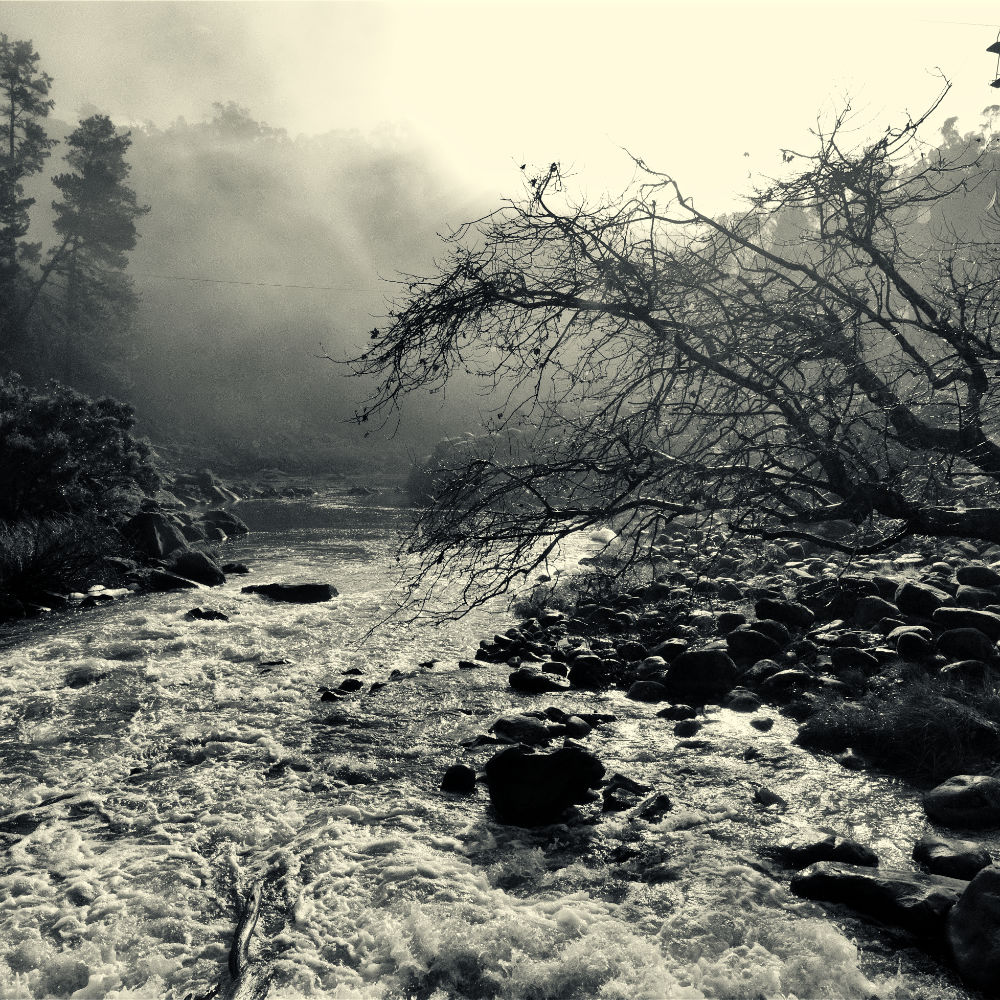
Cataract Gorge first basin captured on Fujifilm Superior 400 on a very smokey day its bushfire season!

For about the last six years I have been using Negative Lab Pro a Lightroom plugin to convert my 35mm negative film scans into tiff files.
I used my last ‘purchased’ copy of LR on a 2010 intel MacMini server.
I have used several digital cameras as scanners and they are fine but I do actually prefer the ‘fidelity’ that comes from CCD scanners when digitising film. No matter how clinical one is dust and scratches are a way of life when using film. The scanning software I use are from Epson and VueScan both have infra red dust and scratche removal. Epsons Digital Ice is particularly good. I use and praise Fujifilm cameras but digital cameras just do not do dust removal, even when the film has been carefully rewashed white processing spots still remain and look even worse if one makes prints. As a side note Affinity photos on an iPad with an Apple Pencil is simply the best retouching tool there is for scanned negatives!

Enter DXO Film Pack 8
I still have and occassionaly use the first DXO film pack from 2011 on a legacy Mac. At that time there was less emphasis on the reproduction of individual film stocks as there was on the use of lens filters and darkroom print processing and toning effects.
Leap forward to the 2026 version and the standalone or plugin version of DXO Film Pack is a totally different beast. Not only can one choose to make your digital images look like almost every film from the last eighty years it is now possible to import scanned negatives from scanners or cameras and invert them into positives then output them to the medium of your choice.
The terms and names for sliders and controls in DXO often do not resemble those used in Adobeland! In many ways they more accurately describe the function, but like any language it has to be learnt. My main interest is the new FP is the radically different film inversion and correction features. I would like to use this as a substitute for Negative Lab Pro to provide simpler integration with DXO Photo Lab 9. As a side note I began using Adobe products in 1985 and have been royally punished several times for my loyalty when Adobe deleted software that I and consequently my clients were heavily invested in. Apart from Negative Lab Pro run on a twenty year old Mac I have given PS and LR the flick. Hate is not a word that exists in my vocabulary but the way that Adobe has treated their loyal Australian customers over the years deserves it.
The above photo was the first I converted in trial version Film Pack 8. The photo was taken in the middle of Summer on Fujifilm Superior. Launceston was surrounded by bushfires so badly that the sun was acting like a giant soft box it was an eerie feeling, however the film or scanner did not pickup the slight orange cast overall. Traces of the orange sun rays can just be seen in the top right hand corner. The DXO Film pack is replete with features and controls which “can be contradictory when learning the software, almost the reverse of Negative Lab Pro, which is logical and simply works as it should almost without the aid of help screens. Awe well perhaps the next version!

Mt Fuji at 285km per hour…


Mt Fuji at 285km per hour captured on Fujifilm400 on a Pentax MX

Mt Fuji at 285km per hour captured on Fujifilm 400 on a Pentax MX with a Tamron SP Super Performance 35-80 zoom in 1980. This film along with a dozen others was processed and arrived with some very very average prints. Recently I have begun to scan them all and have been pleasantly surprized by the results. I used Neg Lab pro for the conversion then denoised in DXO photo lab.


On Pottery

The last dragon kiln in Singapore


The story of pottery manufacture in SE Asia is long and interesting. Many of the potters came from Guandong, specifically the Chaoshan region in the eastern part of the province and most of them are Tew Chew speakers. This photo was taken in the mid seventies in Singapore within a dozen years the traditional potteries had closed down due to government initiated changes in land usage. I believe some of the people involved in the industry moved to Malaysia where there was more space and ready supplies of local clays. Originally in the 19 century these country potteries made utilitarian wares but towards the end of their operations were making mostly plant pots for the local and export markets.


Happy New Year


An almost full moon over the first basin with a fireworks display in the background where the north Esk river merges with the Tamar river

For any photographers that view this image it was captured on a remarkable Fuji X-E5 at a shutter speed so low this ancient photographer can hardly believe it is possible. The detail and colour at ISO 3200 even ten years ago would only been possible with an hours work on that Adobe product. This was more or less straight out of camera and demosaiced in Affinity Photos two with a tweek in levels dodged a bit and finished with clarity five minutes if that!


Blue hour flood…


In the last 48 hours Tasmana has received a lot of heavy rain. Both Esk rivers have risen dramatically showing at least a 500mm increase in the first basin literally over night. The family of Tasmanian hens that live on the small island were hopping around in an agitated frenzy as their home succumbed to the mass of water flowing in from the north Esk river. This image was taken at the little bridge as the water flowed into the main gorge. Fujifilm XE5 hand held 1sec @ ƒ11 on a Viltrox 25mm ƒ1.4. I have been using IBIS since it was first introduced on an Olympus twelve years or so years ago and this version on the Fuji is without doubt is the best manifestation of the technology I have ever used. Fifty years ago as an arts student I could have never imagined that this would have ever been possible…


Nine km with an old telephoto lens on a smokey Launceston day


Nine km with an old telephoto lens on a smokey Launceston day with a new Fuji 40mp sensor

There is a very good possibility that the first SLR that was placed in the hands of most photography students in the 1960’s was the venerable Pentax spotmatic or the Practica both of which had M42 threaded lens mounts. The Harris College now the University of Central Lancashire had a mix of Pentax and Practica SLR’s that were literally hammered by students learning the basics of the craft, they were both fine cameras some had built in light meters and some were completely manual. Once one learned how to read and set an exposure on the Pentax the process and method at that time became engraved on ones brain. It evolved as the standard for setting and judging every subsequent camera used. For the last twelve years I have used a mix of Olympus M4/3’s and Fuji’s, first XPro1 followed by an XT2 which is still operating perfectly. The XPro1 was/is a wonderful camera, perfection… Almost except for the fact that the processor was so slow it became painful. The XT2 resolved all of my minor Xpro hates up until a few months ago when I realised that I was losing many images due to shake and low light noise when the ISO is set much above ISO 2400. DXO fixed most of the noise issues but the shake, that’s due to age and like many others of my years the elixir of youth has yet to appear! I wanted an XPro4 but that is still some time away so I settled for an XE5 and in short I have to say this little camera is close to miracle territory. Which brings me to tonights post; a landscape, the race course at the top of the phot is exactly 8 Km away as the Raven flies hand held ƒ11 1/850th of second ISO 400 with a Canon 100-300 @ 300mm which is almost 50 years old. I’m impressed, I used this lens mostly for bird and landscape photos and not with any crass intentions I will add that it happens to be for sale on Gumtree for the princely sum of AUD270. Nothing wrong with it in its original rather worse for wear case.
And oh yes the XE5 has an align the pointers exposure system… everything old is becoming new again!


Jonquil’s, the first signs of spring!


I like jonquils, daffodils and almost any member of the narcissus family they are quite toxic seriously so for some people in fact my whole garden is filled with toxic plants or those plants that have a mildly noxious fragrance. This may seem a bit anti social, but most folk have no idea that any of them are toxic. But there is a reason, wallabies, pade mellons and possums in fact all the fauna that pass through my garden won’t go near them let alone eat them. It has taken me twelve years to learn which plants all the animals avoid, they know from instinct which is certainly not the case with my fellow humans.
My evening constitutional takes me through an area of the Cataract gorge that has maybe a dozen different varieties of narcissus and at this time of year children pick them and adorn their clothes and bodies with the ‘pretty flowers’. A few years ago I mentioned this to a parent whose offspring was parading around with a couple of the long stemmed daffs in her mouth. The parent looked at me as if I was a total nutter and said “we did this when we were kids and I’m still here!”


A walk through the Tamar Wetlands


A walk through the River Tamar Wetlands reserve in near Launceston in Northern Tasmania

After nearly twelve years away from the Adobe megalith I at last found post capture software that I like and does what I need in simple straight forward and yet thorough way.
In this intervening period I have tried just about every image processor in the App Store and also many that arn’t. DXO 8.5 has evolved into an excellent balance of file management and image processor that the Light Room / Photoshop combo could learn much from. I first used one of the early DXO versions when I used Canon equipment along with NIK’s wonderful tools also since their inception.
In 2012 because of the attraction of Fujis wonderful colour science and a long familiarity for their original film stocks I switched to the magnificent but ploddingly slow X-Pro1. I loved and fitted with that camera and learned very quickly to process its images in Affinity Photos version 1. This came about as a result of not being able to use the ill fitting Photoshop, Bridge and Lightroom combo which had been in my arsenal on since the late eighties plus a few years diversion into the amazingly fast Aperture. Photoshop and Lightroom murdered the brilliance of the Fuji files, they came good eventually but not before Affinity had treated Fuji’s quality with tender respect. When Adobe switched to the horrible (for independent artist photographers) subscription model, after thirty years of regularly paying Adobe’s inflated A$ prices enough was enough…
BUT what to do about a file manager. The only one that fitted with Affinity and Fuji files was PhotoMechanic which is brilliant in the file handling department but tedious when it comes to metadata especially when I had something in the order of 305,000 files. Re modifying that lot was a job that never really was completed.
However, I made this combination work for another four years. Stark financial reality struck again earlier this year when Camera Bits software the good people who authored PhotoMechanic decided to go down the Adobe subscription route I might have suffered this But DXO vers 8 was discovered and found to be a brilliant combination of everything I needed plus a lot of features that adobe have yet to understand. I put it down to the fact that DXO is European and are more understanding of subtlety.
If Camera Bits had stuck to a paid version upgrade model I would likely stayed with the Affinity Photos Photo Mechanic combination but the meta data issue was still a lingering rose thorn in the thumb.
Affinity also produce Affinity Designer and Publisher both of which walk all over the bloated Illustrator and In Design combination and I will still continue to use the very polished Affinity products as they are a lovely informed fit with DXO.
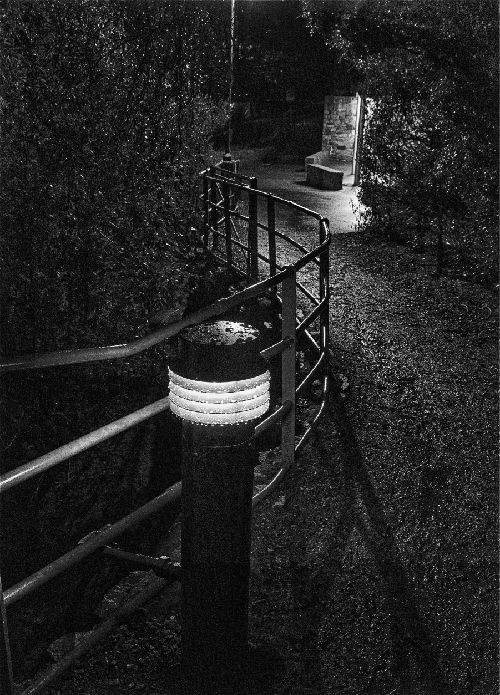
The approach that DXO has taken in basic image processing is a very different approach. Indeed I would go so far as to say unique from anything that I have spent days wading through in the last ten years. Affinity Photos will continue to be used for compositing multiple layers when needed as it is in many respects ahead of Photoshop in its functionality. So there it is a twelve year trip back to a point where as a craftsman I am happy with my tools again… And what has all this got to do with our wonderful Tamar wetlands you might ask… Well it’s very simple Dxo has got me to a place where I can process Infra red very quickly and better than any other software I have ever used…


Are Dahlia’s ever failures?


These days I probably spend an average of two hours a day in the garden and there is always more to do than time permits. My first gardening activities took place in a school garden in the English Lake District. Mr Sharples the teacher impressed on the whole class of twelve or so children that while this was a vegetable garden every garden had to have a few beds and a variety of flowers growing in every month of the year. Some species of flowers had varieties that lasted for several months in the year one of these was the Dahlia of which there must be thousands varieties. To this day Dahlias are still one of my favourite flowers and if there are none present in the garden it feels like there is missing. As there is going to be a frost tonight so this maybe one of the last for 2025.
Canon 7 SLR and a kit lens with a +2 close up lens. Kodak Portra 160.


I’m shy, but this is my tree!


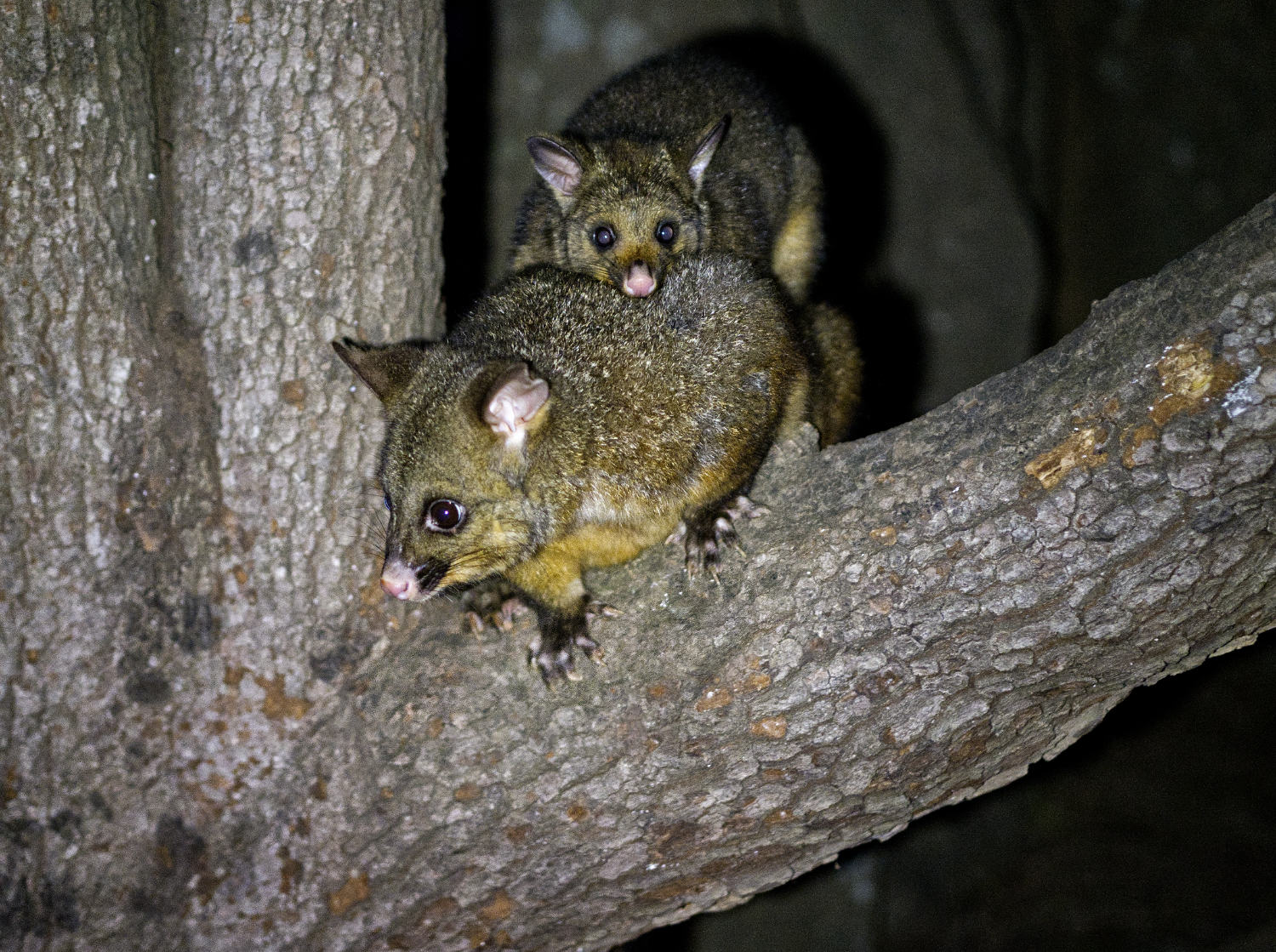
Possums have character or at least that is my experience. Each one I come across on my evening walk is different to the last, some run away, some sniff my shoes, some sit on their hind legs and just stare. Each and every one is totally unpredictable. I would like to think this is a form of cognizance certainly most other creatures in the Cataract Gorge just turn tail and run away as fast as they can but not Brushtail Possums some but not all are happy stay still, ponder and stare. At one point I thought it was just a question of the animal freezing stop still because of my headlight. So I turned it off and approached one in particular, they all have their own patch or area of territory and sure enough in the fading dusk light there she was sat on a rock just staring at me and only moved once I had passed. This particular possum pictured above is often seen at approximately the same time in the same tree most evenings of the week. They are creatures of habit and in many ways its a pleasant thing, fixing a degree of order and familiarity to an evening walk…


A Splendid Wren


With tail feathers longer than its whole tiny body this beautiful little bird is splendid indeed! Living mostly off insects these wrens flit in any direction faster than most photographers can press the shutter fortunately they do stop from time to time to scan the area looking for their next feed!


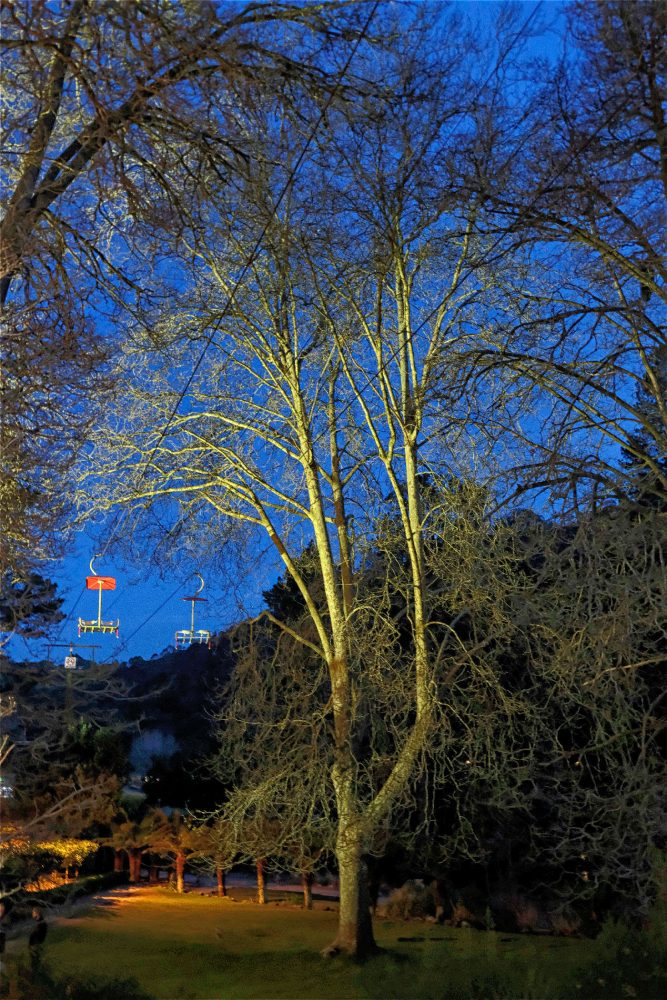
New light on a gigantic plane tree


A gigantic Plane tree that was savagely pruned to accomodate the longest chair lift in the southern hemisphere

A gigantic Plane tree that I walk past most evenings but tonight is different.
A modern marquee bedecked with thousands of coloured fairy lights has been erected a few meters away for a large private party. The lighting is so extensive that it illuminates the plane tree from top to root offering me a photo that I could never have captured otherwise!
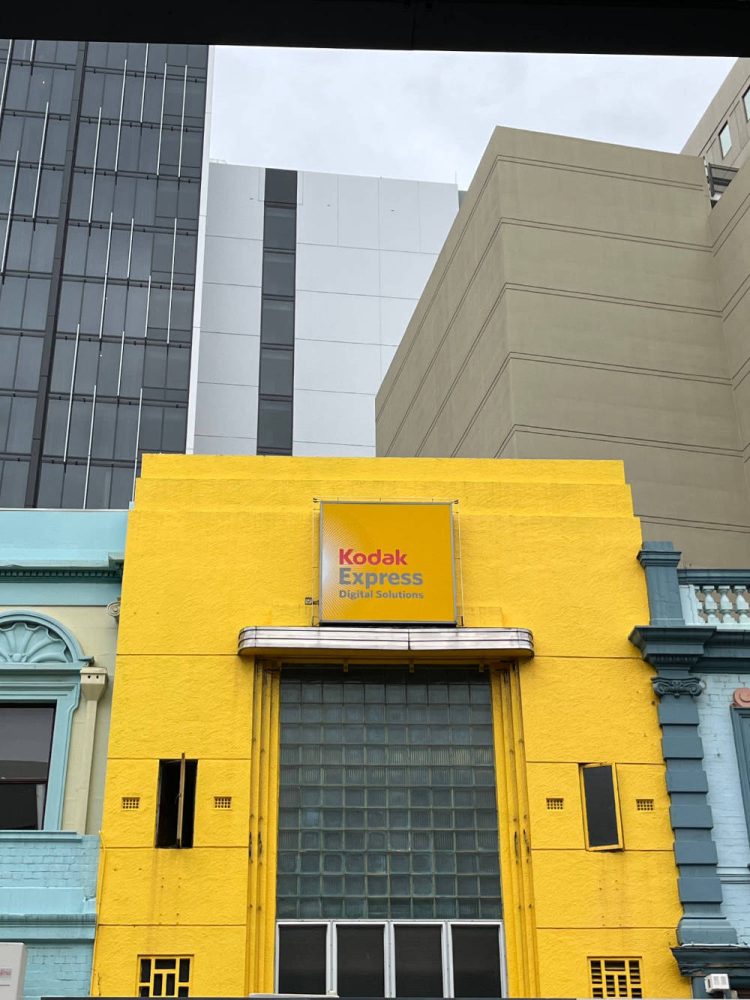

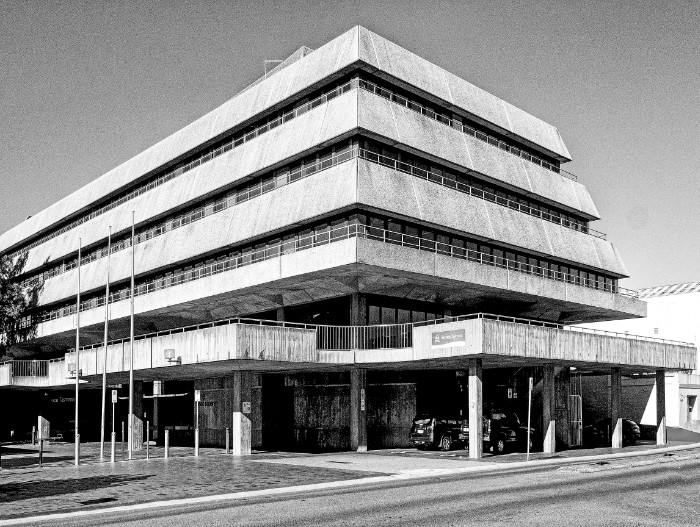
Digital Solutions, a modern ghost sign?


More or less in the centre of Hobart Tasmania Sits a fine Art Deco building which harks back to the days when Kodak was one of the largest companies on the planet and at one point even had a factory in Melbourne that employed 2300 people. How fitting that this building adopted by the company in the early days of this century looks as if it was a cinema from the 1930s! As it happens only the upper part of the building remains in the indelible Kodak yellow, the lower part not visible from its side of the street is a Chocolate shop and more appropriate the upper story is now an architectural practice. Sadly there is only 2 shops in the whole of Tasmania that even sell Kodak film!
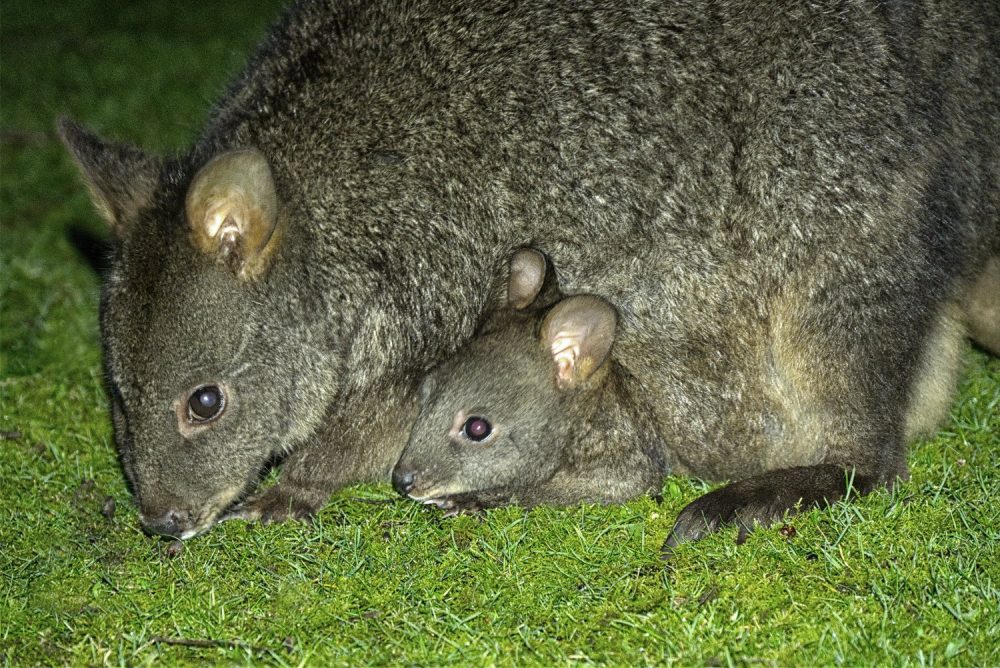

Just hanging out with Mum!


Just Hanging out with mum!

Tis’ the season when there are lots of marsupials carrying new offsprings around in their pouches and at dusk they all come out to feed. This little guy or girl is having an evening meal was captured with a headlight and my Fujifilm XT2…
My first Fuji was an XPro1 it replaced a stolen M9. I loved that camera but after four years its age was really showing.
Technical specifications advanced at an exponential rate in those years to the point where its lack of speed was becoming a hinderance to my work. So with much regret I traded it for an XT2 which I have to say is perhaps the best working digital camera I have ever owned, everything about the Xmount cameras just fits the way I interact with a camera. The exposure compensation dial is exactly where it should be, it just works so darned well. So another seven years on with all these tantalising rumours of an XPro4 slopping around the web my palette is wetted… I just hope the new XPro is as light as the XPro1.
I generally like rangefinders and the XPro1 was the first one that I could easily do close up work with. I did try the Leica reflex thingamabob on an M2 once but went back to a Pentax very quickly – to much fiddling. Apart from close up work I found rangefinders very good for garden magazine photography they allow one to see outside of the frame, a bigger picture so to speak, the Xpro1 did it all very very well!
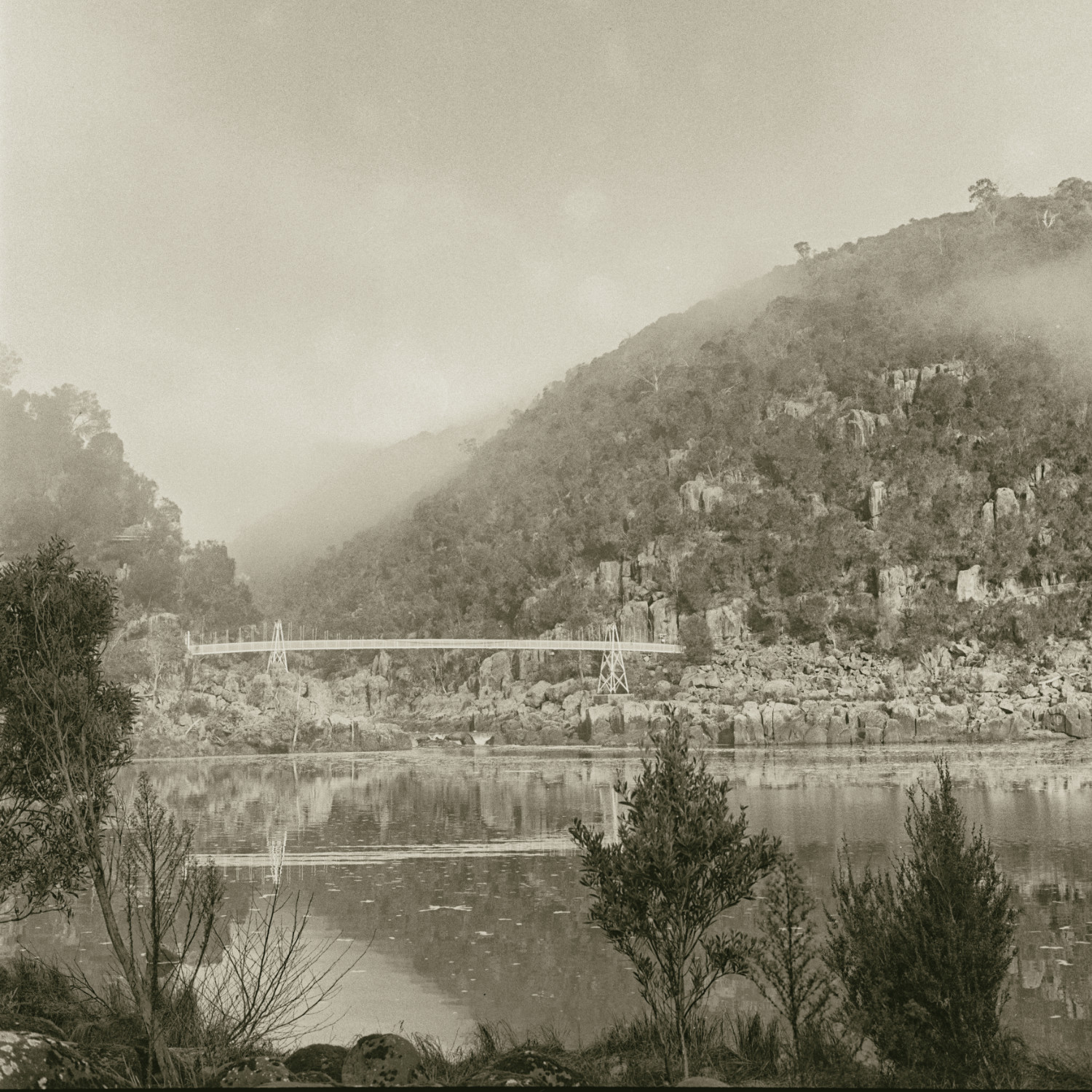

Mist on a sunny Sunday


A sepia warm feel to a photo taken on a cold sunny but foggy day

For some reason I nearly always feel very comfortable using a TLR and the Rollei T in particular. The camera I used through my Art school years was a Minolta Autocord II that focused with a leaver beneath the taking lens which was almost as good as the Rollei left hand focus wheel (knob) The disadvantage was that in cold weather (for me) it was too easy to catch the shutter if the leaver happened to be on the RHS at the start of focusing. Other than that the lenses and the film advance is much the same. Like really the linking of the aperture and shutter speed on the T and peculiarly I think the Rollei T is the only TLR that has that feature. Several TLR’s have 645 adaptor mask and counter wheels but as far as I know only the T in the house of Rollei. I’m going to put some fast 800 colour film in it next something that I have never used in medium before !
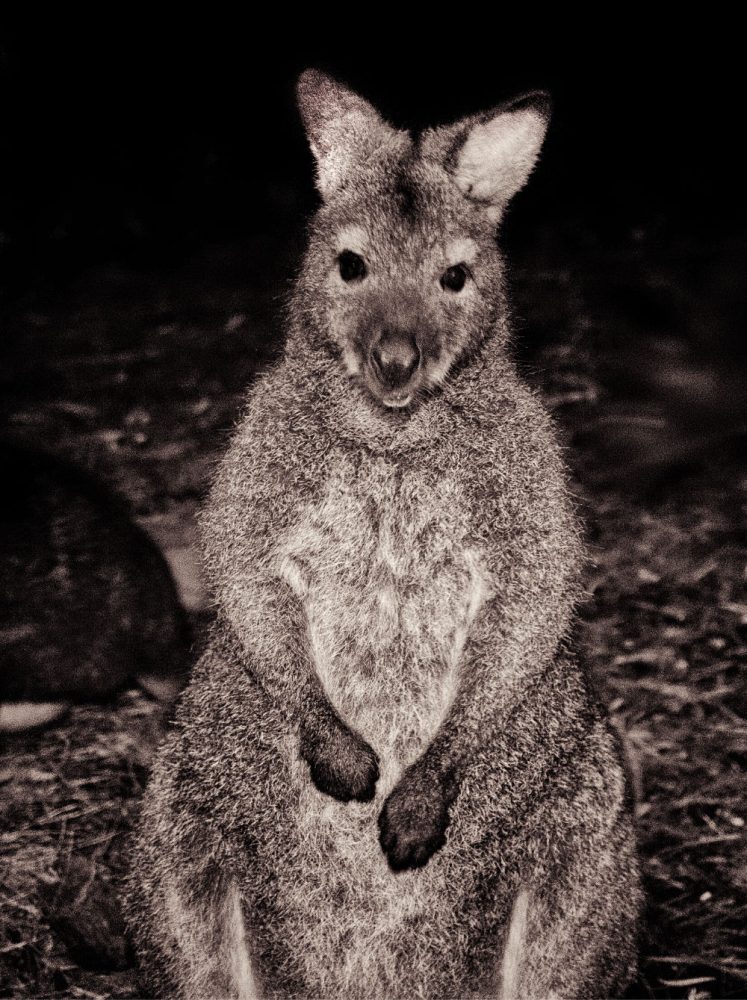

My new model!


A Bennetts wallaby happy to pose for a quick snap no model release required!

Met a new model on the evening walk a very willing to pose Bennetts wallaby. Sadly these wonderful often quite skittish animals are killed in their hundreds on Tasmanian roads especially as they freeze in the headlights, in this case it has been frozen with a TT artisans mini LED which I received yesterday. For USD$ 7.00 this is a remarkable little light it has 3 Color temperatures: 6000K/4500K/3000K with a CRI 95+ for accurate colour rendering, the print is illuminated below is set at 4500K and taken on an iPhone its pretty darned good for the cost. I have been using mini LED’s from Lum X and Joby for about five years now and they just keep getting better and better and halving in cost every few years. For small scale studio work I honestly don’t think I could ever go back to speedlights. I’ll try this one with some colour film over the next few days. I have previously made captures like my new best friend (above) with a fairly high powered headlight in the past, but framing the photo and aiming a head light simultaneously is often quite a tedious process.


TT Artisans the Chinese company that has produce some wonderfull lenses have come up with a remarkable tiny shoe mount light, its ideal for evening walks

TT Artisans the Chinese company that has produce some truly wonderfull lenses have come up with a remarkable tiny shoe mount light, its ideal for evening walks, or even small scale product photography!
Yes a series of Autumnal prints will be available for sale from my gallery in a few weeks…
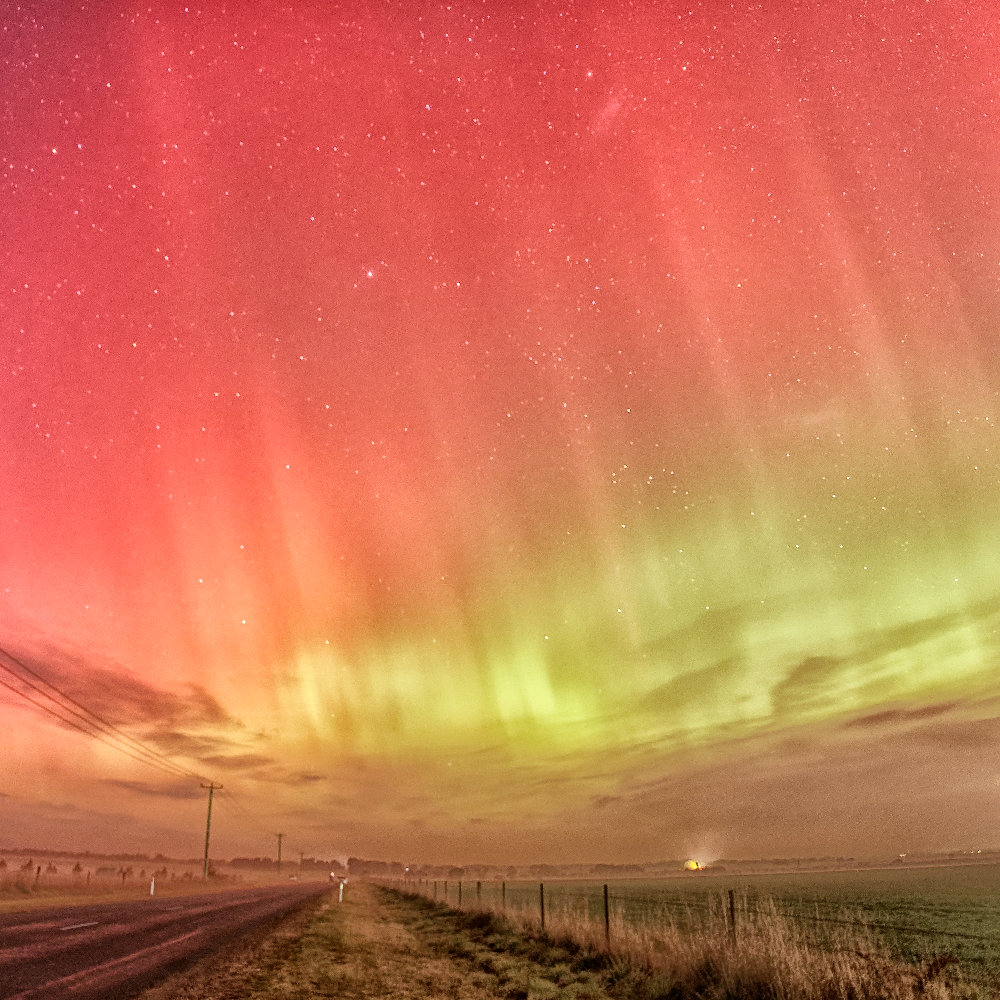

On the road to an aurora…


Aurora visible from Northern Tasmania

Last night was a very good night for sky watching the southern aurora glowed with brilliance and delivered many changes in the two or so hours we could stand, gaze and tolerate the cold. Within an hour a thick fog had descended to treetop height and the temperature dropped further. Compared to the last solar storm in May the colour was visible much higher in sky and the colour seemed to streak both vertically and at a lower angles. I used an OM systems EM5 with the pro zoom the RAW files were processed in DXO pure raw, finished in Affinity Photos 2 and sharpened in NIK.